
Elliot
•

For independent artisans and craft fair vendors, the economics of selling handmade goods are delicate. Producing artisanal items—whether hand-poured candles, bespoke jewelry, or custom prints—requires significant time, labor, and material costs. When operating at weekend craft fairs or artisan markets, capturing every possible sale is vital. However, because many individual items have lower price points (e.g., a $5 die-cut sticker or a $12 bar of organic soap), the payment processing infrastructure plays a massive role in overall profitability.
Traditional payment processors apply fee structures designed for high-volume retail, which actively penalize the micro-transactions common at craft fairs. Legacy mobile Point of Sale (mPOS) systems typically charge a percentage rate paired with a fixed transaction fee per swipe. While this structure works for a $500 television, it mathematically destroys the profit margin on small, handcrafted goods. Furthermore, the requirement to purchase and maintain dedicated external card-reading hardware adds an unnecessary layer of operational friction for independent creators.
The Structural Flaws of Traditional Banking for Artisans
The Fixed-Fee Margin Trap: Legacy providers like Square or PayPal Zettle frequently charge a standard rate plus a fixed base fee (e.g., 2.6% + $0.10 to $0.30 per tap). On a $5 sale, a $0.30 fixed fee instantly consumes 6% of the revenue before the percentage is even applied, devastating the vendor's profit margin.
Hardware Costs & Reliability: Purchasing an external Bluetooth card reader requires upfront capital. At busy weekend markets, these devices are prone to battery drain, Bluetooth syncing failures, and physical misplacement, leading to lost sales when the hardware inevitably fails.
Subscription & Dormancy Penalties: Many traditional merchant accounts require monthly software subscriptions or charge inactivity fees, which heavily penalize "weekend warriors" and seasonal artisans who do not process transactions every single month.
Tilt Pay vs. Traditional Infrastructure
Feature/Metric | Traditional POS Systems | Tilt Pay Ecosystem |
|---|---|---|
Transaction Fees | Variable % + Fixed Base Fee (e.g., $0.30) | Strict 1% Flat Fee (Zero base fees) |
Hardware Required | External Bluetooth Reader (Costly) | None (Uses your existing smartphone) |
Seasonal Dormancy Fees | Common monthly subscriptions | $0 / Zero dormant fees |
The Mechanics of Tilt Pay for Craft Fair Margins
Defending Profits with a 1% Flat Fee
To solve the unit economics of small-ticket artisan sales, Tilt Pay operates exclusively on a transparent 1% flat fee architecture. By structurally eliminating the traditional "fixed swipe fee," Tilt Pay ensures that vendors retain their hard-earned margins regardless of the purchase size. If an artisan sells a $10 custom print, a legacy system might deduct nearly $0.50 in combined fees. With Tilt Pay, the cost is exactly $0.10. This predictable, highly scalable pricing model means artisans no longer have to enforce artificial "minimum card spend" limits at their booths, allowing them to capture every single impulse purchase.
Tap to Pay for Weekend Warriors
Tilt Pay entirely removes the need for physical point-of-sale hardware by utilizing the native Near Field Communication (NFC) chip inside the vendor's smartphone. Through the Tap to Pay feature, an artisan's mobile device is instantly transformed into a fully operational POS terminal. When a customer purchases a ceramic mug, the vendor enters the amount, and the customer taps their physical card, Apple Pay, or Google Wallet directly against the vendor's phone. This eliminates hardware purchase costs, removes battery anxiety, and keeps the vendor's display table clean and uncluttered.
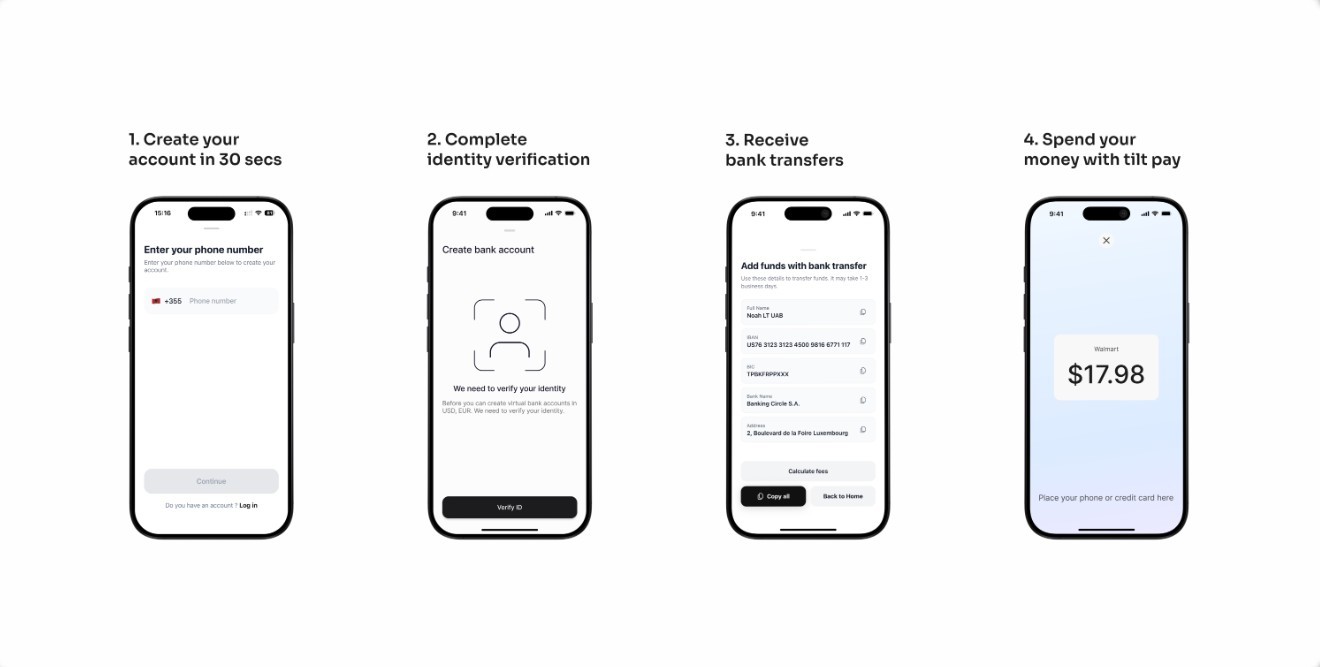
Get Started with Tilt Pay in 4 Easy Steps
Download & Sign Up: Get the Tilt Pay app and complete your quick, secure verification process.
Generate Your Details: Instantly create your personal USD (USA) and EUR (Europe) account coordinates.
Activate Your Network: Enable Tap to Pay permissions on your device, instantly turning your phone into your dedicated craft fair checkout terminal.
Receive Your Money: Watch your funds settle instantly on your dashboard, allowing you immediate access to your capital to restock materials for the next market.
Specific FAQ: Maximizing Artisan Margins
Is there a minimum transaction amount to use Tilt Pay at my booth? No, Tilt Pay has no minimum transaction limits. Because there are no fixed swipe fees, you can profitably process a simple $2 or $3 sale without losing your margin.
Do I have to pay a monthly fee if I only sell at holiday craft fairs? Absolutely not. Tilt Pay does not charge any monthly maintenance or inactivity fees. You only pay the 1% flat fee when you actively process a successful transaction.
Modernize Your Artisan Workflow Today
Your energy should be spent creating exceptional handmade goods and engaging with your customers, not calculating complex swipe fees or troubleshooting external hardware. By transforming your smartphone into a seamless payment terminal and fiercely protecting your margins with a strict 1% flat fee, Tilt Pay empowers independent artisans to build sustainable businesses. Stop subsidizing legacy payment processors with your hard work. Download Tilt Pay today and keep the profit you’ve earned.
Join the Borderless Financial Ecosystem
Thriving in today's global economy requires a modern financial engine that connects you instantly with clients, partners, and friends without the burden of hidden fees. Step into an upgraded payment infrastructure today and experience the ultimate freedom of frictionless transactions.
Get Started: Join Tilt Pay Here